Animal welfare, certifications and responsible production: Ten questions to consider through a One Health approach
Introduction
Consumers are placing increasing importance on how their food is produced. Expressions such as “raised without antibiotics,” “outdoor access,” “free-range,” “organic” and “certified for animal welfare” now occupy a prominent place in the marketing of animal-derived products.
These claims may reflect actual practices and legitimate efforts to improve livestock rearing conditions. They may also encourage the industry to evolve in response to societal expectations.
But is a claim, even when entirely accurate, sufficient to convey all the implications of a production system?
Animal welfare extends beyond housing conditions. It also encompasses health, disease prevention, veterinary care, behaviour, comfort, handling, transport and slaughter.
Some dimensions of animal welfare are more readily perceived and communicated to the public than others. This discussion seeks to highlight issues that, although less visible or less intuitive, remain essential to a comprehensive and informed assessment of animal production systems.
The intention is not to question the benefits associated with certain practices, but to consider them within a more comprehensive assessment framework.
Animal welfare assessment draws, among other things, on the Five Freedoms, internationally recognized by the World Organisation for Animal Health (WOAH):
- Freedom from hunger, thirst and malnutrition.
- Freedom from physical and thermal discomfort.
- Freedom from pain, injury and disease.
- Freedom from fear and distress.
- Freedom to express normal patterns of behaviour appropriate to the species.
These Five Freedoms provide a framework for considering all dimensions of animal welfare, regardless of the production system.
Improvement in one dimension alone is insufficient to establish an overall improvement in animal welfare. Each dimension, its interactions with the others and the actual outcomes for animals must be considered.
The same test applies to conventional indoor systems, alternative systems, and the welfare programs I’ve helped develop. Certification can verify whether defined requirements are met, but it does not, on its own, demonstrate better outcomes for animals.
This discussion of the benefits, constraints and risks associated with different production systems must in no way be interpreted as a justification for mistreatment, neglect or practices that cause avoidable animal suffering.
Preventing such situations and intervening when they occur remain fundamental responsibilities, regardless of the production system.
Similarly, responsible food production cannot be assessed independently of public health, food safety, biosecurity, environmental impacts, working conditions and economic viability.
The One Health approach, recognized by the World Health Organization (WHO), the World Organisation for Animal Health (WOAH), the Food and Agriculture Organization of the United Nations (FAO) and the United Nations Environment Program (UNEP), invites us to consider the interactions between human, animal, plant and ecosystem health in an integrated manner.
This approach provides a particularly relevant framework for broadening our consideration of the different dimensions of responsible food production.
This approach is not merely an international policy direction. The Government of Canada recognizes the interdependence of human, animal and environmental health through its One Health approach.
In Quebec, the Stratégie québécoise de santé et de bien-être des animaux 2025-2035 also follows this integrated approach, focusing on three areas: animal disease management, animal welfare and combating antimicrobial resistance.
Whether in pig, poultry, cattle or other animal production, each system presents distinct benefits, constraints and risks.
Rather than setting production models against one another, should we not seek to identify the practices that deliver the best measurable outcomes for animals, people and the environment?
References
- WHO – One Health
- WOAH – One Health
- FAO – One Health
- UNEP – One Health
- Government of Canada – One Health
- Government of Quebec – Stratégie québécoise de santé et de bien-être des animaux
- WOAH – Animal welfare and the Five Freedoms
- WOAH – Terrestrial Animal Health Code, Chapter 7.1
- NFACC – Code development process
Here are ten questions worth considering.
1. Raised without antibiotics: What happens to sick animals?
The judicious use of antibiotics is an important objective for animal and public health.
Reducing their unnecessary use helps combat antimicrobial resistance.
However, in any commercial livestock operation, some animals become ill. Certain bacterial infections require antibiotic treatment.
In Canada, the Canadian Food Inspection Agency (CFIA) specifies that the claim “raised without the use of antibiotics” applies to animals that have received no antibiotics from birth to slaughter.
Animals requiring antibiotic treatment must receive appropriate care when their health warrants it. Products derived from these animals are then no longer eligible for this claim.
This distinction is essential.
Do consumers understand that a product from animals raised without antibiotics does not necessarily mean that antibiotics are never used anywhere in the production system?
- In both pig and poultry production, how do we ensure that sick animals receive medically necessary treatment?
- Are treatment policies and the commercial destination of animals that have received antibiotics sufficiently transparent?
- Are treatment decisions made solely on the basis of animals’ needs, regardless of their commercial eligibility?
- Should the priority not always be to prevent suffering and provide appropriate treatment to sick animals?
Responsible antibiotic use does not mean eliminating antibiotics at all costs. It means using them appropriately when clinical circumstances warrant it.
References
2. Does certification guarantee better practices or better outcomes?
Several certification programs establish specific requirements for livestock rearing conditions.
They may emphasize greater space allowances, environmental enrichment, increased freedom of movement, particular housing types or restrictions on various procedures performed on animals.
These requirements can contribute positively to animal welfare.
However, the methods used constitute only one part of its assessment.
In Canada, several livestock sectors already have national animal care assessment programmes developed from the National Farm Animal Care Council (NFACC) Codes of Practice.
The NFACC framework includes animal-based, resource-based and management-based measures.
The absence of a distinctive commercial certification therefore does not necessarily mean the absence of a structured animal welfare assessment program.
WOAH recognizes the importance of indicators measured directly on animals when assessing their welfare.
In pig production, these indicators include mortality, morbidity, injuries, lameness, body condition and behaviour.
In poultry production, they include gait abnormalities, footpad dermatitis, injuries, fractures, abnormal behaviours and mortality.
Different laying hen housing systems provide an interesting example.
Some better facilitate the expression of natural behaviours, while others may offer advantages in controlling certain health or physical risks.
Risks of pecking, keel bone fractures, injuries and mortality may vary according to the systems and their management.
- How can we determine which system actually provides the highest level of animal welfare?
- Does certification based on housing conditions establish that animals experience better outcomes?
- Are sufficiently representative comparative data available to demonstrate this superiority?
- Can different production systems, when well managed, achieve equivalent outcomes or offer respective advantages depending on the indicators considered?
Should we not give as much importance to the outcomes achieved as to the means used to achieve them?
References
- WOAH – Animal Welfare in Broiler Chicken Production Systems
- WOAH – Animal Welfare and Pig Production Systems
- NFACC – Animal Care Assessment Framework
3. Certifications: How are standards established, and by whom?
Certification programs may be developed by independent organizations, industry associations, animal protection organizations or groups representing different stakeholders.
Their objectives may be legitimate and contribute to improved practices.
However, the requirements adopted may reflect scientific knowledge, societal expectations and particular views about desirable livestock production methods.
In Canada, Codes of Practice for the care and handling of farm animals are developed through a national process coordinated by NFACC. This process brings together stakeholders including producers, veterinarians, scientists, government representatives and animal protection organizations.
The process combines consensus-building, a review of scientific knowledge on priority issues and public consultation. These codes form the foundation of several national animal care assessment programs.
Consensus guarantees neither scientific perfection nor uniform implementation. It does, however, reflect a structured process of dialogue among groups with different perspectives. The coexistence of different standards provides an opportunity to examine their complementarities, respective requirements and actual contributions to improving animal welfare.
The same expectation of transparency and demonstration of outcomes should apply to all animal welfare assessment programs, whether sectoral, national or associated with distinctive commercial certifications.
The quality of a standard cannot be assessed independently of the rigour of its implementation, the effectiveness of its verification mechanisms and the outcomes achieved for animals.
Canadian Codes of Practice reflect a comprehensive understanding of animal welfare, informed in particular by the Five Freedoms. They seek to translate these principles into requirements and recommended practices adapted to the needs of different species, scientific knowledge and production contexts.
This approach seeks to consider all dimensions of animal welfare rather than favouring a particular characteristic of a livestock production system.
The objective is to achieve the best possible animal welfare conditions while accounting for interactions between health, comfort, behaviour and the physical and mental state of animals.
- How are requirements based on scientific findings distinguished from criteria that more closely reflect preferences about production methods?
- What role is given to specialists in animal health, epidemiology, biosecurity, veterinary medicine, animal behaviour and food safety?
- How are potential conflicts of interest disclosed and managed?
- Are standards regularly reviewed in light of new scientific knowledge?
- Should certification be understood as confirmation of compliance with specific requirements rather than proof of overall superiority over other production systems?
- How do certification requirements differ from existing Codes of Practice and national programs?
- To what extent is the contribution of individual requirements to actual improvements in animal welfare documented through objective data?
References
- WOAH – Animal Welfare and Pig Production Systems
- WOAH – Animal Welfare in Broiler Chicken Production Systems
- NFACC – Codes of Practice
- NFACC – Code development process
- NFACC – Animal Care Assessment Framework
4. Outdoor access: What are the trade-offs in biosecurity, predation and animal health?
Outdoor access may allow animals to express certain natural behaviours, including exploration, foraging and interaction with their environment.
However, it may also introduce additional risks associated with infectious diseases, parasites, predators and environmental conditions.
- In pig production: African swine fever
African swine fever (ASF) poses a major threat to Canada’s pig population.
This disease, which has never been detected in Canada, can cause high mortality in infected pigs and serious economic consequences.
The CFIA notes that wild pigs can transmit the virus through direct contact with domestic pigs or indirectly through contaminated soil, feed, water or equipment.
- In poultry production: Avian influenza
Highly pathogenic avian influenza is also a major concern.
Wild birds, particularly waterfowl, can contribute to the circulation and transmission of the virus.
Poultry with outdoor access may be more exposed to wild birds, their droppings and contaminated environments.
Of course, enclosed barns do not eliminate all risks. People, vehicles, equipment and other vectors can also introduce pathogens.
- Predation: A direct animal welfare issue
Outdoor access also increases opportunities for encounters with predators.
In poultry production, foxes, coyotes, raccoons and birds of prey can cause injuries, mortality and fear or panic responses.
In pig production, young piglets may also be vulnerable to certain predators.
Predation is therefore not merely an economic loss.
It can result in painful injuries, suffering, stress and death.
- Are predation risks and their consequences for animal welfare measured with as much attention as the behavioural benefits of outdoor access?
- Are protective measures, including fencing, shelters, monitoring and access management, assessed on the basis of their outcomes?
- Raccoon rabies: A timely example from Quebec
In the fall of 2026, cases of rabies associated with the raccoon variant were confirmed in cattle in Quebec, including in Coaticook, in the Eastern Townships, and Saint-Hugues, in Montérégie.
These events provide a concrete illustration of evolving animal health risks to which livestock in affected regions may be exposed.
Rabies is a fatal viral disease that can affect all mammals, including livestock and humans.
Transmission occurs primarily through contact with the saliva of an infected animal, particularly through a bite.
Pigs, cattle, sheep and goats may be affected by this risk. Poultry, however, are not normally susceptible hosts for rabies.
This example reminds us that animal health risks are not static: they evolve with the regional epidemiological situation.
- How do production systems with outdoor access account for the emergence or spread of diseases present in wildlife?
- Are preventive measures adapted promptly when risks change?
Enclosed production systems also have their own challenges, particularly with respect to stocking density, air quality, environmental control, freedom of movement and expression of natural behaviours.
Each system therefore requires prevention and management measures suited to its characteristics. None should be regarded as inherently free of animal welfare risks.
A fundamental question
If outdoor access facilitates the expression of certain natural behaviours, how do we demonstrate that these benefits are achieved while adequately managing the additional risks of disease, predation and wildlife exposure?
Is preventing disease, injury and suffering not also an integral part of animal welfare?
References
5. Transport and slaughter: Does animal welfare end at the farm?
Transport and slaughter are integral parts of the life experience of animals raised for food production.
Housing conditions may be excellent, but animals must also be handled, loaded, transported, unloaded and slaughtered under appropriate conditions.
In pig production, prolonged journeys may result in fatigue, thermal stress, dehydration, injuries or discomfort.
In poultry production, catching, crating, transport, waiting before slaughter and handling of birds are also critical stages.
Canadian regulations establish maximum intervals without feed, water and rest, varying by species and animal category.
These limits, however, do not guarantee the absence of suffering.
The CFIA specifies that animals’ actual needs must always be considered and that action must be taken before regulatory limits are reached when circumstances warrant it.
- How are transport and slaughter conditions integrated into the overall assessment of animal welfare?
- Do certification programs measure injuries, mortality, thermal stress and the condition of animals on arrival?
- Are journey duration and distances travelled also considered in environmental assessments?
- Are stunning methods, their effectiveness and indicators of insensibility taken into account?
Should animal welfare not be assessed throughout an animal’s entire life, from birth to death?
References
- CFIA – Health of Animals Regulations, Part XII: Transport of animals
- CFIA – Guidelines for animal welfare preventive control plans for the slaughter of food animals
6. Zoonoses and food safety: How can we safeguard animal health achievements?
Animal health and public health are closely linked.
Certain animal diseases can also affect humans, directly or through food.
In pig production: Trichinella
Canada enjoys a particularly favourable situation with respect to Trichinella in its commercial pig production.
This situation is associated in particular with controlled feeding, animal health management and biosecurity practices.
According to data published by the CFIA, the last confirmed case of trichinellosis in a Canadian pig dates back to January 2013.
It involved an animal from a non-commercial operation whose meat did not enter the commercial food supply.
Exposure to wildlife or infected tissues is a possible route of infection.
In poultry production: Salmonella and Campylobacter
Salmonella and Campylobacter bacteria are important food safety concerns.
They may be associated with poultry and poultry products, particularly meat and, in the case of Salmonella, eggs.
These pathogens may be introduced or spread through several routes, including infected animals, rodents, equipment, water, the environment and management practices.
Risks vary according to the characteristics of the operation and the effectiveness of preventive measures.
It would therefore be incorrect to conclude that all outdoor systems consistently present a higher risk for each of these bacteria.
- How do production programs account for zoonotic risks and potential consequences for human health?
- Are preventive measures assessed with as much attention as housing characteristics?
- Can improvements in certain dimensions of animal welfare be considered independently of food safety and zoonosis prevention?
References
7. Social responsibility: What about the people who care for animals?
Responsible food production must also consider the conditions under which people who raise, transport and slaughter animals work.
Production models may have different ownership, work organization and compensation structures.
These differences alone do not establish that conditions are better or worse.
However, they remind us that social responsibility issues extend well beyond livestock rearing practices.
- Does animal welfare certification also guarantee respect for workers’ rights and working conditions?
- Are occupational health and safety, training, staff competency, respect for workers’ dignity and fair treatment taken into account?
- Do consumers sufficiently distinguish animal welfare certifications from other forms of social certification?
- Is the competency of those who care for animals not itself a determining factor in animal welfare?
- Should responsible production not consider both the welfare of animals and the well-being of those who care for them?
References
8. Environment: Is production perceived as more natural necessarily more sustainable?
Some livestock production systems are associated with practices perceived as more natural.
These practices may offer environmental benefits, but they may also entail different requirements for agricultural land, feed, energy or transport.
Controlled-environment livestock systems may, for their part, offer opportunities for precise management of environmental conditions, feeding and resources. No system should be presumed superior across all environmental indicators without comparative assessment.
- How can the environmental footprint of different livestock production systems be compared objectively?
- Are greenhouse gas emissions, water consumption, land requirements, feed conversion and manure management assessed using appropriate indicators and units of comparison?
- Are impacts associated with facility construction, animal transport and food processing taken into account?
- Are the environmental consequences of a potential disease introduction, including emergency measures and animal disposal, included in the risk analysis?
- Is a production method perceived as more natural necessarily more sustainable when its entire life cycle is examined?
Reference
9. Economic viability: How can we achieve the best outcomes with limited resources?
Livestock production systems differ in their investment requirements, resource use and operating costs.
Buildings, automation, environmental control, labour, feed, animal health measures and transport infrastructure represent costs that vary across models.
Some systems may reduce certain investments while increasing other requirements.
But the objective should not be limited to comparing production costs.
It should also involve assessing actual improvements in animal welfare and public health.
- How can the additional benefits associated with certain practices be measured against the resources required to implement them?
- Could similar or better outcomes be achieved through targeted improvements to existing systems?
- In a context where food affordability and food security remain important concerns, how should priorities be established?
- With limited resources, should we not prioritize interventions that deliver the greatest measurable improvements in animal welfare while preserving the need to meet the needs of each individual animal?
Reference
10. One Health: Are we really looking at the whole picture?
The One Health approach recognizes that decisions made within a production system can have simultaneous consequences for animals, people and the environment.
A change in livestock rearing conditions may improve certain aspects of welfare while influencing health risks, resource requirements or management practices.
These trade-offs do not mean that an improvement should be abandoned. They mean that it should be assessed in its entirety.
- How can systems that each have benefits and constraints be compared objectively?
- What importance should be given to indicators measured directly on animals?
- How can disease prevention, zoonoses, veterinary care, transport risks, predation, food safety, the environment and economic viability be integrated?
- How can we ensure that consumers understand both the benefits and the limitations of the claims and certifications presented to them?
- Should the real question not be: Which practices deliver the best measurable outcomes for animals, people and the environment?
References
- WHO – One Health
- WOAH – Animal Welfare and Pig Production Systems
- Government of Canada – One Health
- Government of Quebec – Stratégie québécoise de santé et de bien-être des animaux
Conclusion: A Claim Never Tells the Whole Story
Certifications and marketing claims can play a useful role in informing consumers and improving agricultural practices.
They make it possible to recognize certain production characteristics and may help drive changes in practices.
But they do not necessarily convey all the implications of a livestock production system.
A positive attribute can coexist with risks or constraints that also deserve consideration.
- Outdoor access may facilitate certain natural behaviours, but may also introduce additional challenges related to biosecurity, predation and wildlife exposure.
- A raised-without-antibiotics program may support more judicious antimicrobial use, but must never compromise the care required by sick animals.
- Certification may confirm compliance with specific practices without necessarily demonstrating overall superiority over other systems.
- And favourable rearing conditions do not replace the need to ensure transport and slaughter that respect animal welfare.
Animal welfare is defined not only by how an animal is raised, but also by the outcomes experienced throughout its life.
From this perspective, biosecurity, disease prevention, management of zoonotic risks, food safety, public health, working conditions and environmental sustainability are not secondary considerations.
They are integral to responsible production.
Canada already has collective frameworks for improving animal welfare, including consensus-based Codes of Practice and sectoral animal care assessment programs. These achievements deserve recognition, while continuing to be questioned, assessed and improved.
Complementary certification initiatives can also contribute to this progress. The contribution of all these approaches would benefit from being assessed not only in terms of established requirements, but also in terms of the rigour of their implementation and the measurable improvements they achieve.
This discussion is consistent with the One Health approach recognized in Canada and Quebec.
Rather than setting livestock production systems against one another or presuming that one model is superior to another, why not seek to identify the practices that deliver the best outcomes, regardless of their origin or certification?
The Five Freedoms and the One Health approach provide two complementary frameworks for reflection. The former invite us to consider animal welfare in all its dimensions, while the latter broadens that reflection to interactions between animals, people and the environment.
Together, they remind us that a responsible assessment of production systems cannot be based solely on one livestock rearing characteristic, a marketing claim or a certification.
This approach requires objective data, measurable indicators, risk assessment and a commitment to continuous improvement.
It also requires recognition of the limits of our knowledge and the complexity of the trade-offs inherent in all animal production.
A claim can be accurate without telling the whole story.
And from a One Health perspective, it is precisely that whole story that deserves to be examined.
Author’s Note – Professional approach, independence and transparency
This publication forms part of the exercise of my professional responsibilities as a professional agrologist, particularly in education, information, science communication and protection of the public.
It seeks to foster an informed understanding of agri-food issues and contribute to independent and constructive reflection grounded in scientific knowledge, recognized standards and professional experience.
This approach seeks neither to promote nor to discredit any particular production system, certification program or claim. It recognizes the informational value of these claims while inviting readers to consider their scope from a comprehensive perspective.
The principles of integrity, rigour, objectivity, impartiality and confidentiality that guide this publication also govern all my professional activities, including my work as an auditor.
The views expressed are those of an independent professional agrologist and do not represent any of the organizations or companies for which I carry out professional activities.
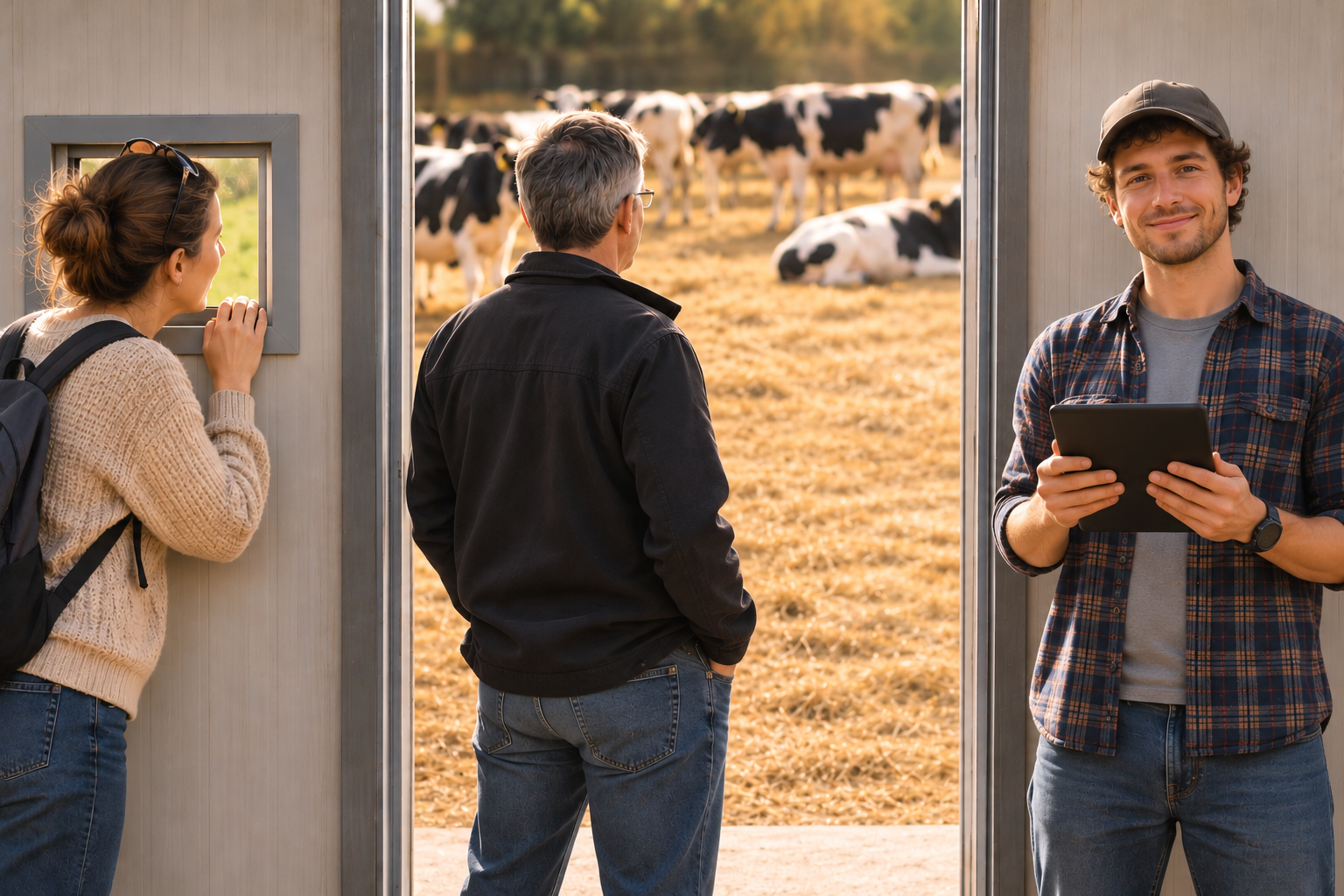
Generative artificial intelligence tools were used to support documentary research, structuring, drafting and language editing of this publication, as well as the creation of its illustration.
The guiding ideas, directions and professional judgement expressed are those of the author, who assumes full responsibility for the published content.